


Essential Steps to Take When Your Furnace Emits Unusual Noises or Smells
August 7, 2026
Don't ignore strange furnace noises or odors! Learn essential actions to identify issues and ensure your heating system operates safely and efficiently.

Essential Steps to Take When Your Furnace Emits Unusual Noises or Smells

A furnace that suddenly makes odd noises or emits unfamiliar odors is a safety and comfort concern that warrants immediate attention. This article explains what counts as unusual furnace noises and smells, why quick, informed action matters for occupant safety and equipment longevity, and how to triage symptoms so you can decide between safe DIY checks and calling for professional help. Readers will learn common noise categories and their mechanical or combustion-related causes, how to identify smell types (including gas, burning, musty, and metallic), step-by-step immediate actions to protect people and property, and clear criteria for when to request emergency technician service. The guide also covers how certified HVAC technicians diagnose problems, the role of preventative maintenance in avoiding these issues, and essential safety measures for gas leaks and carbon monoxide. Throughout, the content uses a safety-first approach that prioritizes evacuation and emergency response for high-risk signs, and it integrates practical local context for homeowners in the St. Louis and Fenton area who may require rapid on-site assistance.
What Are the Most Common Unusual Furnace Noises and Their Causes?
Unusual furnace noises typically signal a mechanical fault, combustion irregularity, or ductwork reaction; each noise points to a limited set of probable components such as the blower motor, burners, ignitor, or ducts. Understanding the mechanism behind each sound helps homeowners assess risk: delayed ignition can cause banging and indicates combustion timing issues, while screeching often reflects blower motor bearing failure or belt wear that can lead to overheating. Rapid identification reduces the risk of further damage because noise → component stress → increased failure probability is a direct causal chain. Below is a quick reference mapping noise types to likely causes and immediate homeowner actions to help triage problems safely before a professional arrives.
This table provides a rapid diagnostic frame: the noise (entity) suggests a failing component (relationship) that increases risk (value), which guides whether to power down, ventilate, or evacuate and call professionals. The next section explores specific banging and booming causes in detail and how to respond.
Why Is My Furnace Making a Loud Banging or Booming Noise?
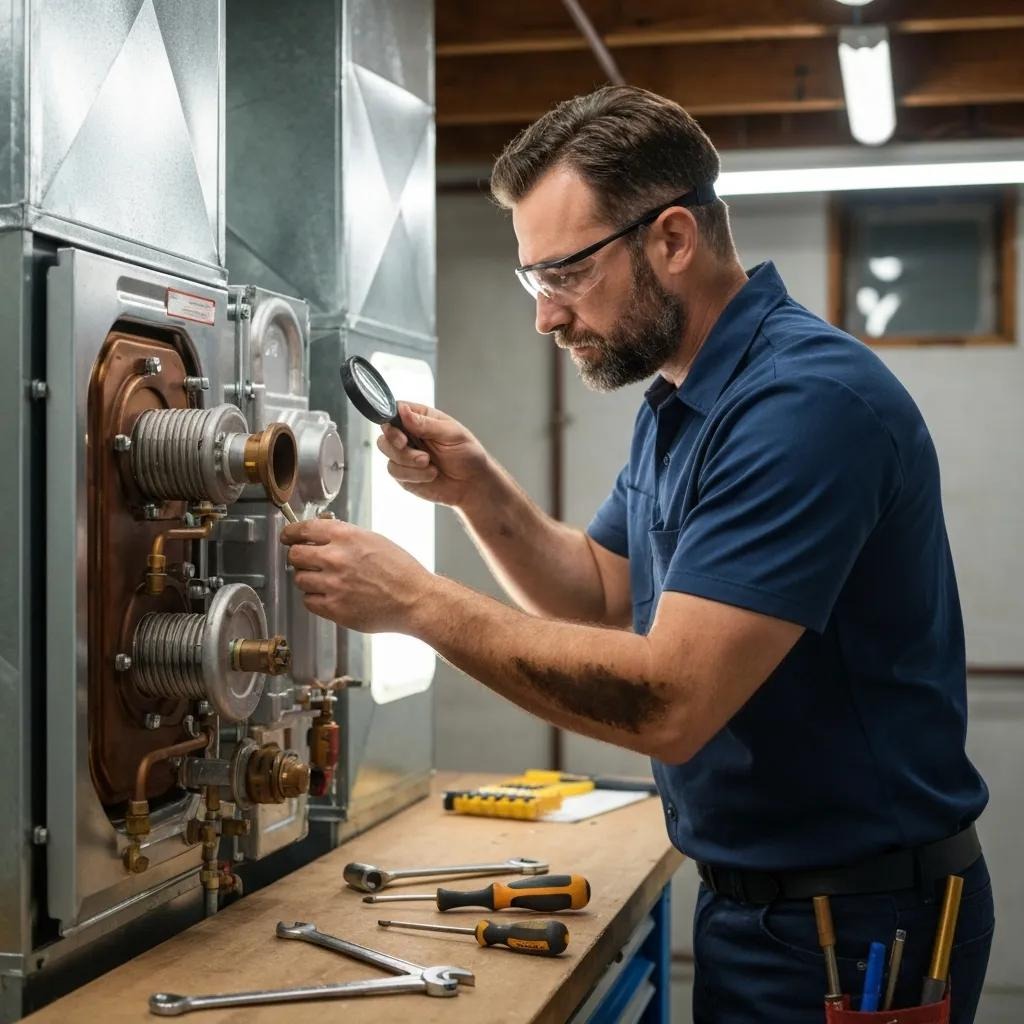
A loud banging or booming noise during furnace startup is commonly caused by delayed ignition, where unburned gas accumulates briefly before igniting all at once, producing a noticeable pop that can stress the heat exchanger. Delayed ignition directly increases the risk of heat exchanger cracking and unsafe combustion byproducts entering the living space, so it is a high-priority issue. Another non-combustion source is rapid duct thermal expansion: colder ducts rapidly warming can create popping sounds that are less urgent but still worth checking. If you hear a boom accompanied by soot, yellowing of the burner flame, or a gas odor, shut the system down, ventilate the area, and treat the event as potentially dangerous while contacting a qualified technician for combustion inspection. Recognizing these distinctions helps prioritize evacuation versus scheduled service.
What Does Screeching or Whining Furnace Noise Indicate?
Screeching or high-pitched whining typically indicates mechanical friction in the blower motor—worn bearings—or a failing belt that is slipping under load, both of which reduce airflow and can lead to motor overheating. Reduced airflow increases combustion instability and places extra strain on components like the heat exchanger, making timely intervention important. Homeowners can perform a basic visual check: ensure the air filter is clean and that exterior vents are unobstructed, since severe airflow restriction can exacerbate whining. If a brief filter change does not resolve the noise or if noise worsens when the system starts, cut power to the unit and schedule professional service; continued operation risks motor failure and potentially costly repairs.
Research into bearing failures in blower motors highlights that degraded grease due to high temperatures and oxidation can lead to significant wear and eventual fracture, directly correlating with the screeching or whining sounds indicative of a failing blower motor.
How to Identify and Respond to Unusual Furnace Smells?
Unusual furnace odors point to a handful of likely sources—natural gas, burning dust, mold/mildew in ducts, or metallic/electrical overheating—and each smell carries a different urgency level and recommended response. Correctly mapping smell type to likely source reduces danger because smells like rotten egg (natural gas) require immediate evacuation, whereas a light burning dust odor on first startup often resolves after brief ventilation. Below is a concise table that links smell categories to probable causes and how urgent the homeowner response should be.
When Is a Burning Smell from Your Furnace Normal or Dangerous?
A light burning or dust smell on the furnace's first run after long shutdown is often normal as dust on heat exchangers or burners burns off; this transient odor typically dissipates within an hour of operation and carries low urgency. Persistent burning smells, a plastic-like or acrid chemical odor, or smoke indicate component overheating, electrical arcing, or insulation melting, which are dangerous and require immediate shutdown and technician evaluation. If the burning smell returns after initial burn-off, switch the furnace off at the thermostat and breaker and avoid using the heating system until a certified technician inspects wiring, motor bearings, and control boards.
What Causes Musty or Moldy Smells in Furnace Air?
Musty or moldy furnace odors often originate from moisture accumulating in ductwork, condensate pans, or evaporator coils, particularly in systems with high humidity or poor drainage; dirty filters and stagnant air also contribute to microbial growth. These smells affect indoor air quality and can aggravate allergies and respiratory symptoms; initial mitigation includes replacing the air filter, running a ventilation cycle, and addressing humidity. If odors persist, a professional inspection can locate and remediate biological growth in ducts or coils, and technicians may recommend targeted cleaning, improved drainage, or installing higher-grade filtration to prevent recurrence.
What Immediate Steps Should You Take When Your Furnace Makes Strange Noises or Smells?
When your furnace exhibits unusual noises or smells, prioritize occupant safety: detect, assess, and act. Detect by noting symptoms (sound type, smell character, presence of soot or flame color changes), assess urgency using the smell/noise decision cues (rotten egg or fainting = immediate evacuation), and act by following a clear shutdown and ventilation sequence if risk is moderate. A structured, numbered HowTo approach reduces hesitation in stressful moments and helps homeowners follow a proven sequence that minimizes ignition risk and preserves evidence for technicians. The list below outlines immediate steps to follow when encountering furnace anomalies.
- Stay calm and assess: Identify the specific noise or smell and check household occupants for symptoms such as headache, dizziness, or nausea.
- If gas odor or severe symptoms: Evacuate immediately, avoid using electronics, and contact emergency services or gas utility from a safe location.
- If non-gas but abnormal: Turn thermostat to OFF, cut power at the breaker if comfortable doing so, and ventilate by opening windows and doors.
- Document and report: Note when symptoms started, whether they recur, and any visible signs like soot or flame color; this helps technicians diagnose issues faster.
These numbered steps serve as a compact emergency checklist and are optimized for quick decision-making in high-stress situations. If you need rapid on-site diagnosis or emergency repair in the St. Louis or Fenton area, Patriot Heating, Cooling and Air Quality offers 24/7 emergency service and can dispatch certified technicians to assess and repair urgent furnace problems.
How to Safely Turn Off Your Furnace and Ventilate Your Home
Safely powering down a furnace involves an ordered sequence that minimizes ignition risk and preserves safety: first, set the thermostat to OFF to stop calls for heat, then, if you are comfortable and it is safe, switch off the furnace at the dedicated circuit breaker to remove electrical power. If you suspect a gas leak and know how to shut the gas valve at the appliance, avoid doing so unless trained—evacuating and letting the gas company or emergency responders secure the supply is often safer. After power-down, open doors and windows to ventilate while staying upwind of any gas odor, and keep occupants and pets outside until the area is declared safe. These procedures reduce ongoing combustion risk and allow technicians to diagnose without additional hazards.
When and Why Should You Call a Professional HVAC Technician for Furnace Issues?
You should call a professional HVAC technician when warning signs indicate danger beyond basic homeowner checks: persistent gas odor, carbon monoxide alarm activation, visible soot, repeated ignition failure, or mechanical noises that continue after filter and simple checks. Certified technicians perform systematic diagnostics—combustion analysis, heat exchanger inspection, motor and electrical testing, and airflow measurement—to identify root causes and ensure repairs meet safety codes. Professional intervention reduces risk by replacing unsafe components, validating combustion efficiency, and restoring proper control logic, which prevents future emergencies and maintains safe operation. Below is a decision-style table to help homeowners choose the correct response to warning signs.
What Are the Warning Signs That Require Emergency Furnace Repair?
Emergency repair is warranted when signs indicate immediate danger: strong gas odor, activation of carbon monoxide alarms, visible flames or smoke from the furnace, sudden severe noises like booming that suggest combustion instability, or occupants experiencing acute symptoms such as fainting. Each of these signs implies a failure mode that could lead to explosion, fire, or toxic exposure, so treating them as emergencies is essential. For less acute but still serious signs—persistent electrical odors, repeated ignition problems, or soot accumulation—power down the system and arrange prompt professional service rather than continued operation.
If you encounter any of the high-risk warning signs above and need prompt, local help, Patriot Heating, Cooling and Air Quality provides 24/7 emergency HVAC service and certified technicians who can diagnose and repair urgent furnace issues.
How Can Preventative Maintenance Help Avoid Unusual Furnace Noises and Smells?
Preventative maintenance reduces the incidence of unusual noises and smells by addressing wear points, combustion cleanliness, and airflow before they escalate into failures. Regular tasks—filter changes, burner cleaning, lubricating moving parts, testing ignition and safety controls, and inspecting the heat exchanger—prevent dust accumulation, delayed ignition, motor seizure, and electrical faults that cause odors and noises. Consistent maintenance improves efficiency, extends equipment life, and reduces emergency repairs by turning reactive fixes into scheduled upkeep. The checklist below helps homeowners prioritize routine tasks and differentiate between DIY checks and technician-only services.
- Replace or check filters monthly during heavy use seasons to maintain airflow and prevent blower strain.
- Schedule annual professional tune-ups that include burner cleaning, combustion testing, and heat exchanger inspection.
- Keep vents and returns clear of obstructions and maintain proper clearance around the furnace to reduce rattling and overheating.
These maintenance actions work together to prevent the common causes of noise and smell by ensuring clean combustion, proper lubrication, and unrestricted airflow. Below is a technician-oriented checklist that clarifies which tasks homeowners can do and which require professional tools.
Regular preventative care translates into fewer emergency calls, increased safety, and lower lifetime operating costs. To reduce the risk of unexpected failures this heating season, consider scheduling a professional maintenance visit; Patriot Heating, Cooling and Air Quality provides preventative maintenance plans and can arrange timely tune-ups for homeowners in the St. Louis and Fenton area.
What Regular Maintenance Tasks Keep Your Furnace Quiet and Odor-Free?
Practical maintenance keeps furnaces running smoothly: replace filters according to manufacturer guidance (often monthly during heavy use), inspect and seal loose access panels or duct joints, and keep the furnace area free of stored items that could restrict airflow. Technicians complement homeowner tasks with annual burner cleaning, combustion analysis, heat exchanger inspection, and motor testing—services that require diagnostic tools and safety protocols. Together these activities reduce the most common causes of noise (bearing wear, loose panels) and smells (dust burning, electrical overheating), making routine maintenance the best long-term strategy.
What Safety Precautions Should Homeowners Follow Regarding Furnace Gas Leaks and Carbon Monoxide?
Gas leaks and carbon monoxide (CO) represent two distinct but critical hazards: gas leaks are often detectable by smell due to added odorants, while CO is colorless and odorless and requires detectors to identify. Homeowners should install and maintain CO detectors near sleeping areas and follow evacuation procedures for either gas odor or CO alarm activation. Prevention includes annual combustion and heat exchanger inspections, ensuring proper ventilation, and avoiding DIY interventions for suspected gas leaks. A concise safety checklist below reinforces must-do actions to protect occupants and property.
- Detect: Install and test CO detectors monthly and be alert for the rotten egg gas odor.
- Evacuate: If you smell gas or a CO alarm sounds, evacuate immediately and call emergency services from a safe location.
- Avoid ignition sources: Do not operate lights, switches, phones, or appliances if gas smell is present.
- Schedule professional checks: After any evacuation or alarm, arrange certified HVAC inspection before re-entering or restarting the furnace.
These steps form a repeatable safety protocol: detection → evacuation → professional verification. The following subsections explain how to detect leaks by smell and why CO requires special attention.
Why Is Carbon Monoxide a Hidden Danger and How to Protect Your Home?
Carbon monoxide is colorless and odorless and can cause symptoms ranging from headache and nausea to unconsciousness and death; because occupants may not perceive CO, detectors are the only reliable early warning. Place CO detectors near sleeping areas and on each level of the home, test them regularly, and replace batteries or units per manufacturer instructions. If a CO alarm sounds, evacuate immediately and call emergency services; technicians will perform combustion gas analysis and heat exchanger inspection to find and remedy the source before reoccupation. Proactive inspection and detector maintenance are the most effective protections against this hidden hazard.
If you require urgent assistance, especially for high-risk signs such as gas odor or CO alarm activation, Patriot Heating, Cooling and Air Quality provides local emergency response and certified diagnostic services for homeowners in St. Louis and Fenton; contact them to request rapid on-site evaluation and repair.

.webp)


